Cosmetics
Centre for Applied Bioscience Research (CABR) has experience of working with cosmetic companies from the very early stages of initial conception, all the way through to well-established indigenous companies.
CABR’s core cosmetic technical expertise is based around natural extract development and characterisation, as well as specific cosmetic testing: in vitro (in the lab) and in vivo (in people).
Natural extracts: valorisation of natural materials, by-products and waste products are a core reason for the establishment of the Centre for Applied Bioscience Research (CABR). CABR has delivered a range of projects based on natural extract development, characterisation and efficacy testing. This includes state-funded, EU-funded and industry-funded projects. Types of biomass utilised include plants such as primrose, orchid, ragwort, seaweed, Ginkgo biloba, holly, ivy and berries, and organisms such as microalgae, cyanobacteria, diatoms, fungi and sea sponges. Types of bioactive compounds extracted include lipids, carbohydrates, carotenoids, flavonoids, polyphenols, polysaccharides and enzymes.
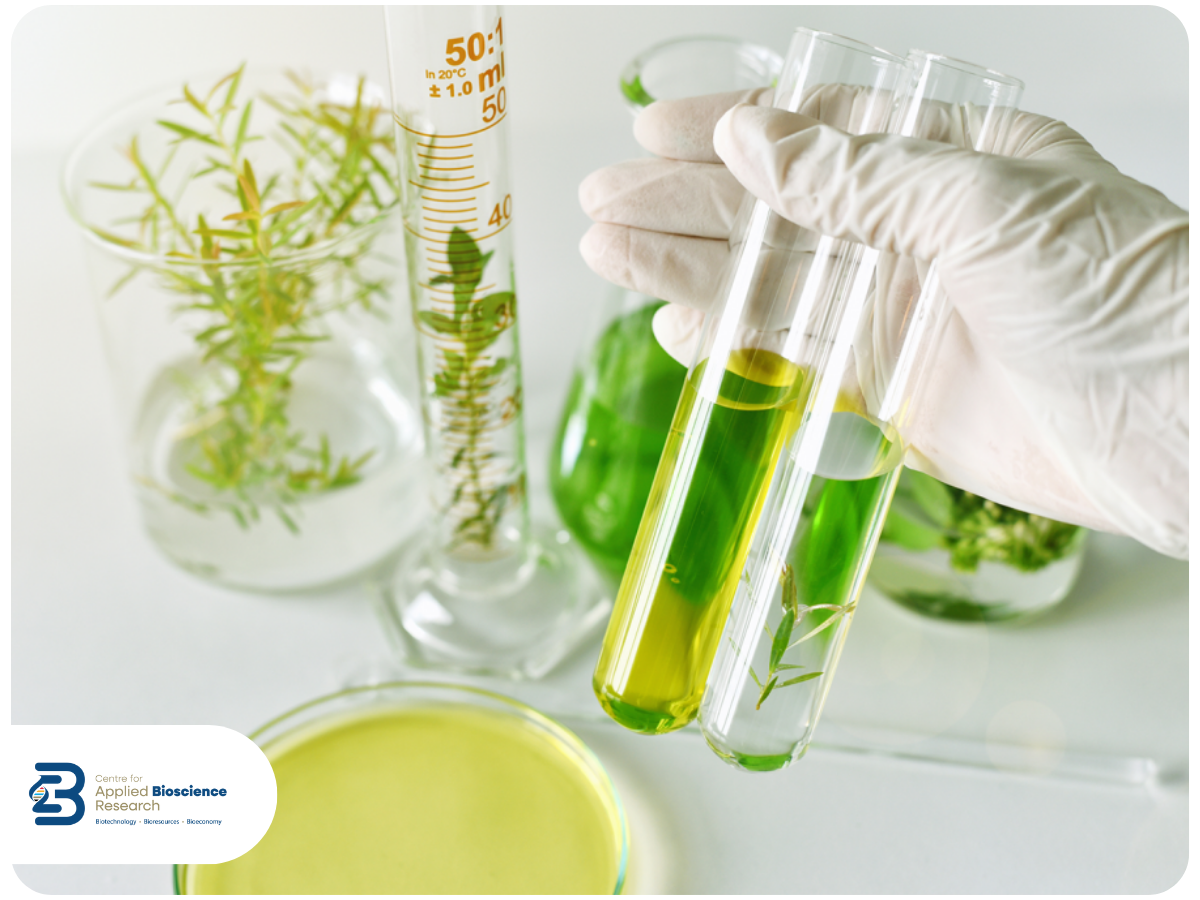
In vitro testing: there is a range of activities of relevance to the cosmetics sector. These include antioxidant, anti-inflammatory, anti-elastase, anti-hyaluronidase and anti-tyrosinase. Centre for Applied Bioscience Research (CABR) routinely tests for these using biochemical tests (in a test tube). This provides a good screening platform to determine the potential of cosmetic ingredients or final products. Additional in vitro testing that CABR provides is based on mammalian cell culture testing. Cell culture testing facilitates the growth of mammalian cells in the laboratory; CABR has expertise in the growth, maintenance and testing of human skin cells such as fibroblasts and keratinocytes. Once these cells have been grown in the laboratory, ingredients and final products can be applied to the cells to determine activities such as anti-inflammatory, antioxidant, collagen production, etc. While biochemical testing for various activities is useful as a screen, cell culture testing provides data that is more relevant for real biological systems.
In vivo testing: CABR has a volunteer panel of over 100 people for efficacy testing of cosmetic products. This testing is fully approved by Munster Technological University (MTU) Ethics Committee. The purpose of this testing is to objectively evaluate the impact of cosmetics on skin with regard to properties such as elasticity, moisturisation, skin barrier efficacy and others. This provides companies with the necessary data to validate their potential marketing claims. Through this process, we may also uncover information that could be used to form new claims. The performance of sample products is tested using well-established non-invasive skin testing (analyser) probes. The probes are safe, hygienic and cause no discomfort.
Companies availing of this research provide their sample products for evaluation. A CABR researcher will apply samples of cosmetic products to the participants (e.g. 24-hour study), or the participants will be given the product to apply daily at home (e.g. four- or twelve-week study). All products will require a Safety Certificate to be eligible for testing.
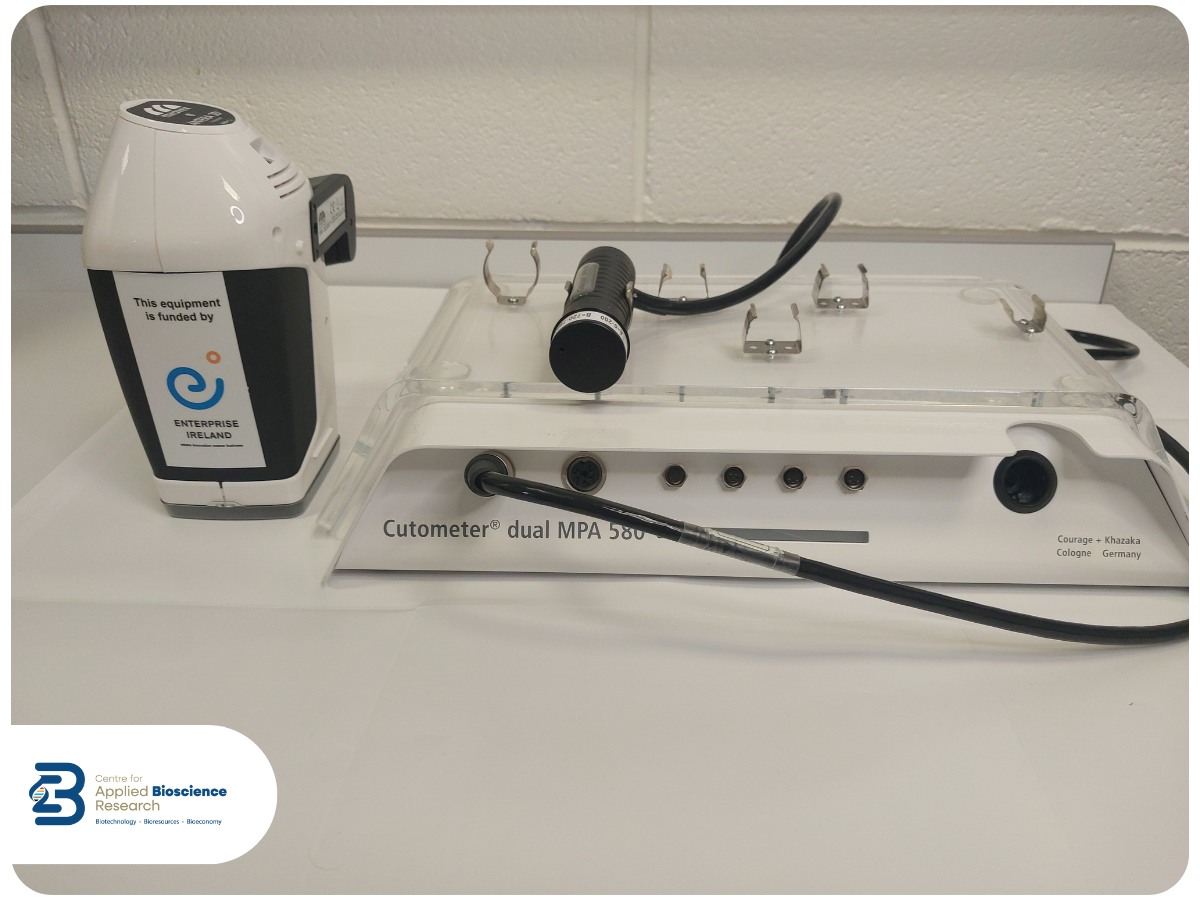
The non-invasive skin testing probes are produced by Courage + Khazaka (C+K) in Germany and have been used to objectively determine the parameters of the skin for over 30 years in the scientific community and have been extensively cited throughout the literature (Cho et al. 2009, Firooz et al. 2012, Fujimura et al. 2002, Ryu et al. 2008). Survey data can also be gathered from participants in the form of questionnaires. No personal data from the participants is shared with any third parties. The probes currently available in CABR are:
- Cutometer® dual MPA 580 (elasticity),
- Corneometer® CM 825 (hydration/moisturisation),
- Sebumeter® SM 815 (sebum production),
- Tewameter® TM 300 (skin barrier efficacy),
- Visioline® VL 650 (wrinkle reduction),
- Visiopor® PP 34 N
- Mexameter® MX 18 (acne reduction),
- Sebufix® F 16 (sebum production),
- Corneofix® F 20 (hydration)